Built In Appliance Repair
Understanding the problem
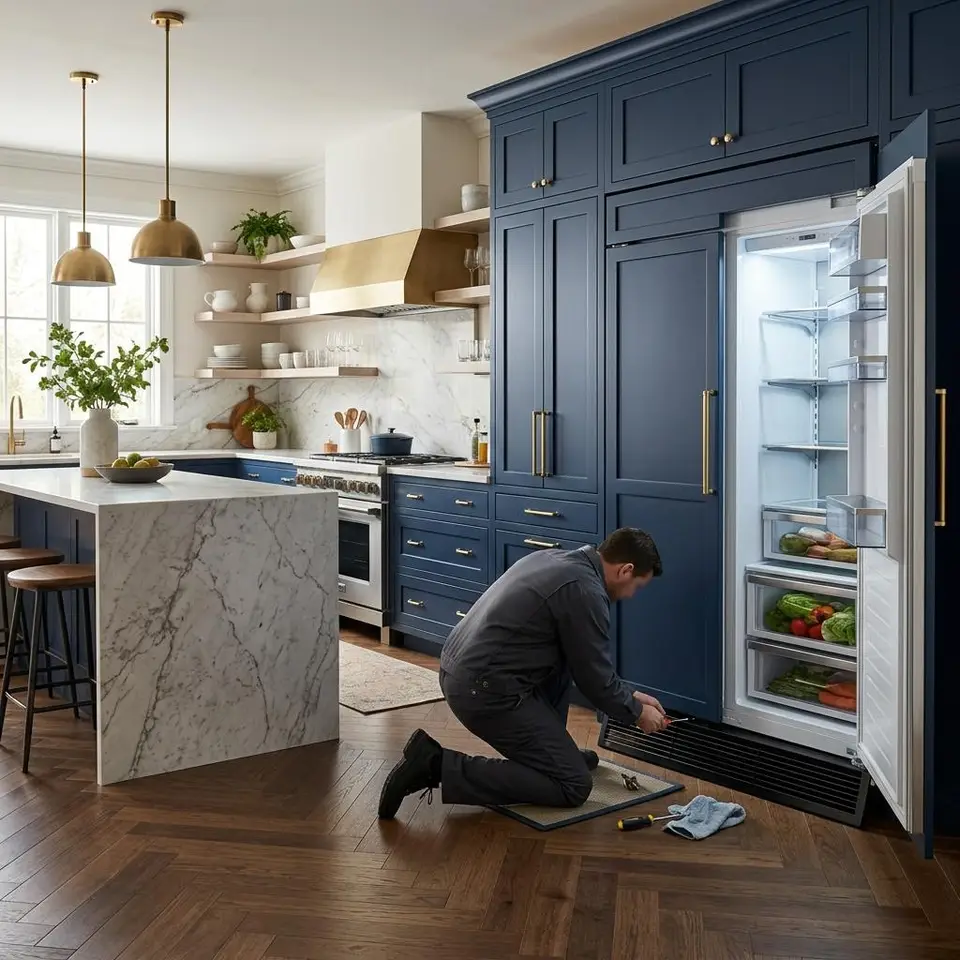
Built in refrigerators, freezer columns, refrigerator drawers and panel ready units sit flush with surrounding cabinets. That clean look comes with practical differences: tighter ventilation paths, top or front mounted condensers, custom door panels and installation that is not meant to be pulled out casually.
Many of the faults are familiar ones, such as failed fans, defrost problems, ice maker trouble and worn gaskets. The difference is how carefully the unit has to be accessed, and how much attention needs to go to grilles, trim and finished panels.
Problems we hear about with built in units
- A built in refrigerator or column that is running warm while the kitchen feels normal
- Dust clogged top or toe kick grilles and a unit that seems to run hot
- Doors that no longer close evenly or custom panels that have shifted
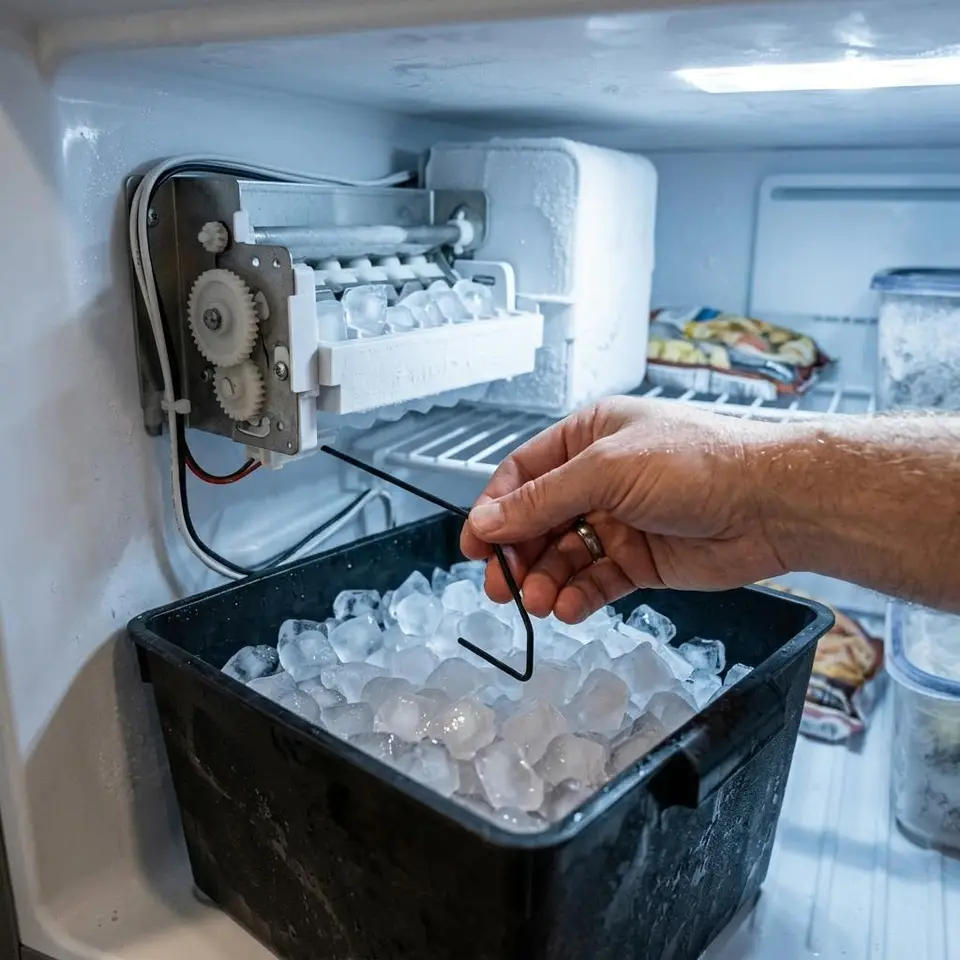
- Ice makers and dispensers in integrated units that have stopped producing
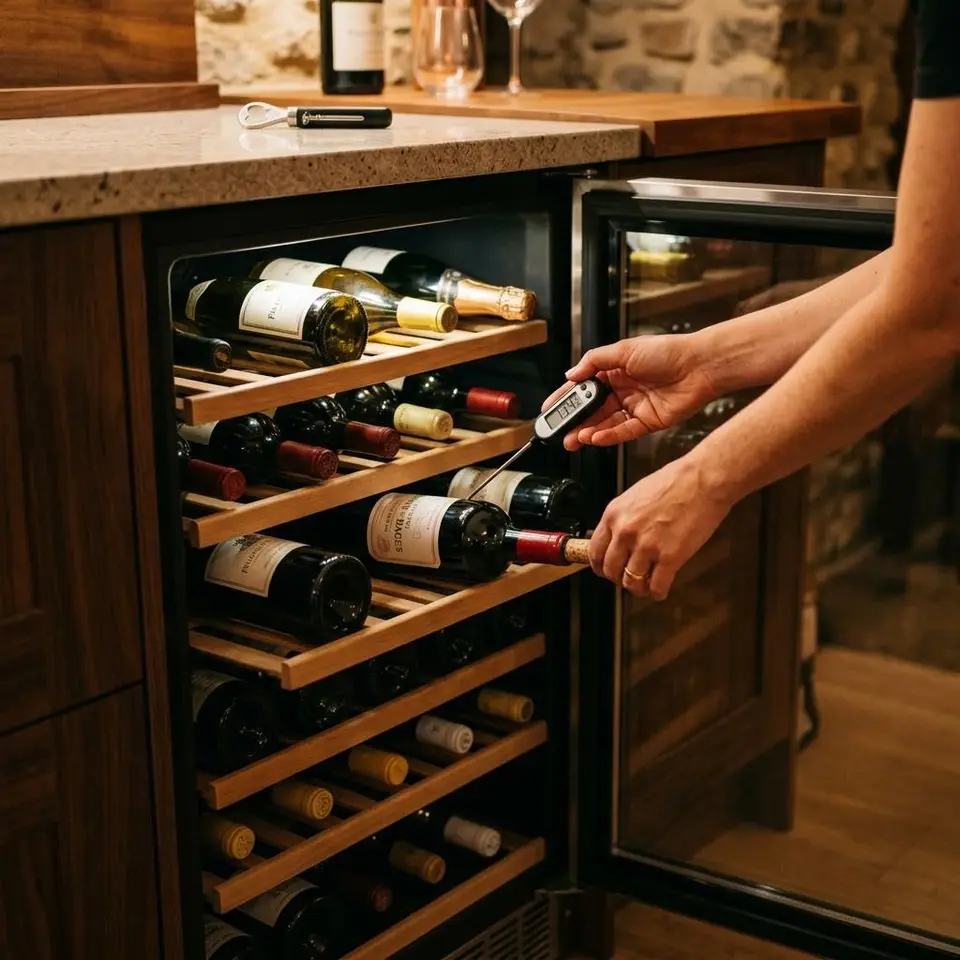
- Undercounter refrigerator or freezer drawers that are warm, noisy or leaking
- Error codes or warning lights on the control panel
How built in service differs
Ventilation and condenser access
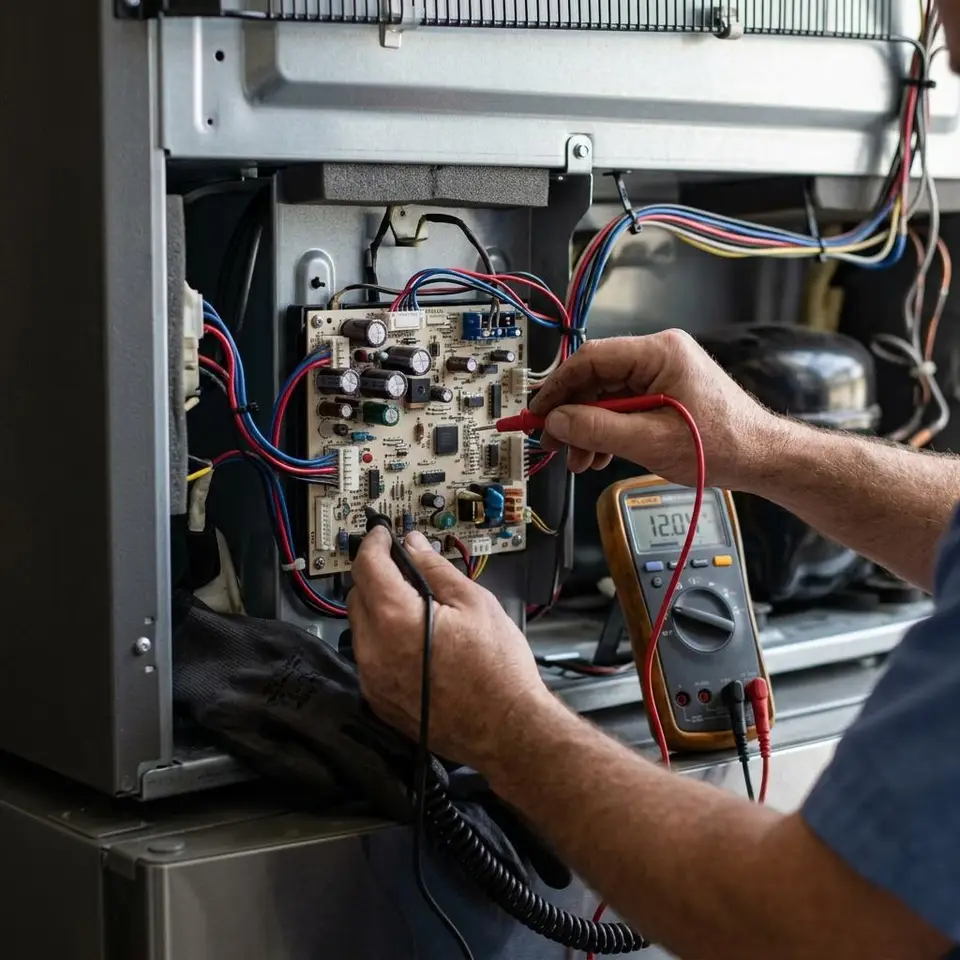
Built in units often breathe through a grille at the top or along the toe kick. Restricted airflow is a common cause of poor cooling, so cleaning and checking condenser airflow is part of the assessment.
Doors, hinges and panels
Heavy custom panels put extra load on hinges and door closers. Adjusting alignment helps doors seal properly and protects the gaskets, which in turn keeps humidity and frost under control.
Careful access to the unit
When a built in unit needs to come forward for service, it is done with attention to the floor, the surrounding cabinets and anti tip hardware. Many repairs can be handled from the front without moving the unit at all.
Integrated drawers and columns
Refrigerator drawers, freezer columns and undercounter units each have their own layouts. Model information makes it much easier to plan the right approach before the visit.
Before you call about a built in unit
- Find the model and serial label, often behind the top grille or inside the door edge.
- Note whether the unit is a single column, a pair of columns or a combined refrigerator and freezer.
- Check that the vent grilles are not blocked by décor or stored items.
- Take a photo of any error codes shown on the display.