Refrigerator Sealed System Repair
Understanding the problem
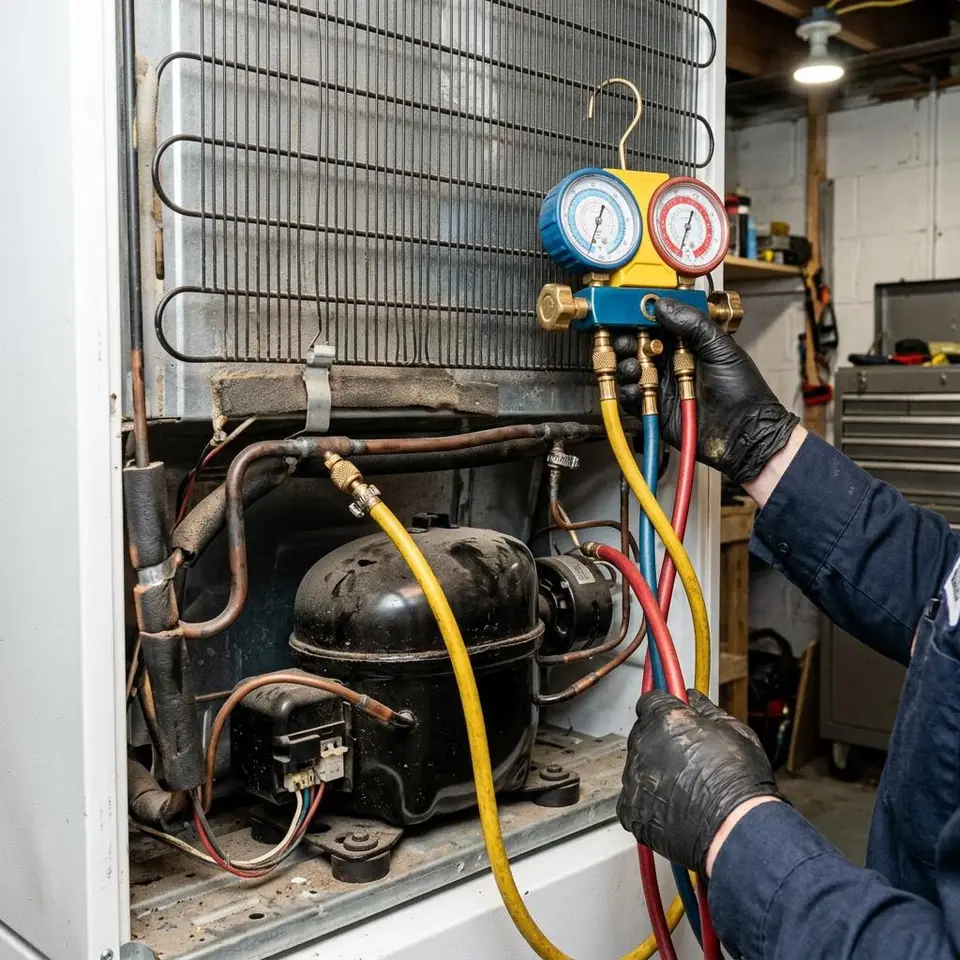
The sealed system is the closed loop of refrigerant that actually moves heat out of the cabinet. It includes the compressor, the condenser, the evaporator, the capillary or filter drier and the copper tubing that ties them together. Unlike fans or sensors, these parts are sealed at the factory and require specialized tools and handling to open, recharge or replace.
Many problems that look like sealed system failures turn out to be something simpler, such as a defrost fault or a failed start relay. That is why careful testing comes first, before anyone recommends work on the refrigerant circuit.
Signs that point toward the sealed system
- Both the refrigerator and the freezer are warm, even though fans run and the evaporator is not frosted over
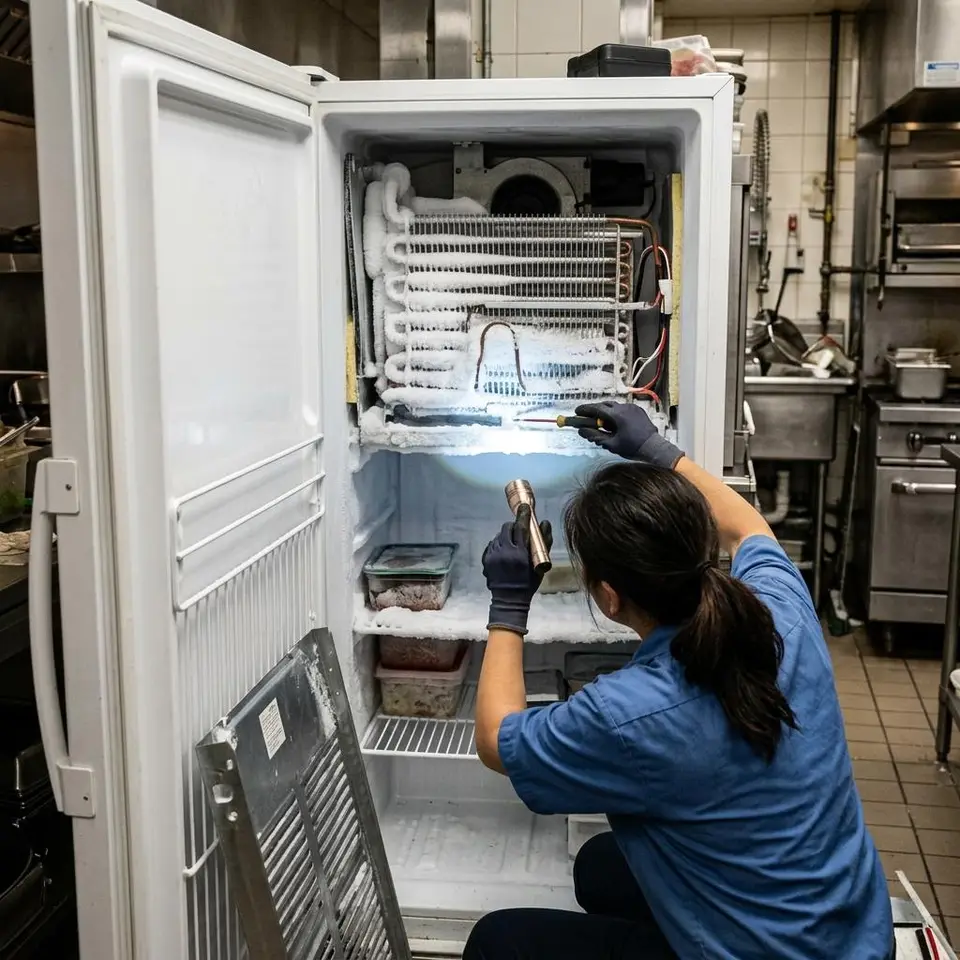
- The compressor runs constantly but the evaporator coils stay only partly frosted or warm
- The compressor hums, clicks off and tries again without ever settling into a run
- An oily residue near tubing joints or at the compressor, which can indicate a refrigerant leak
- A hissing or gurgling sound that is new and paired with poor cooling
What sealed system work includes
Confirming the diagnosis
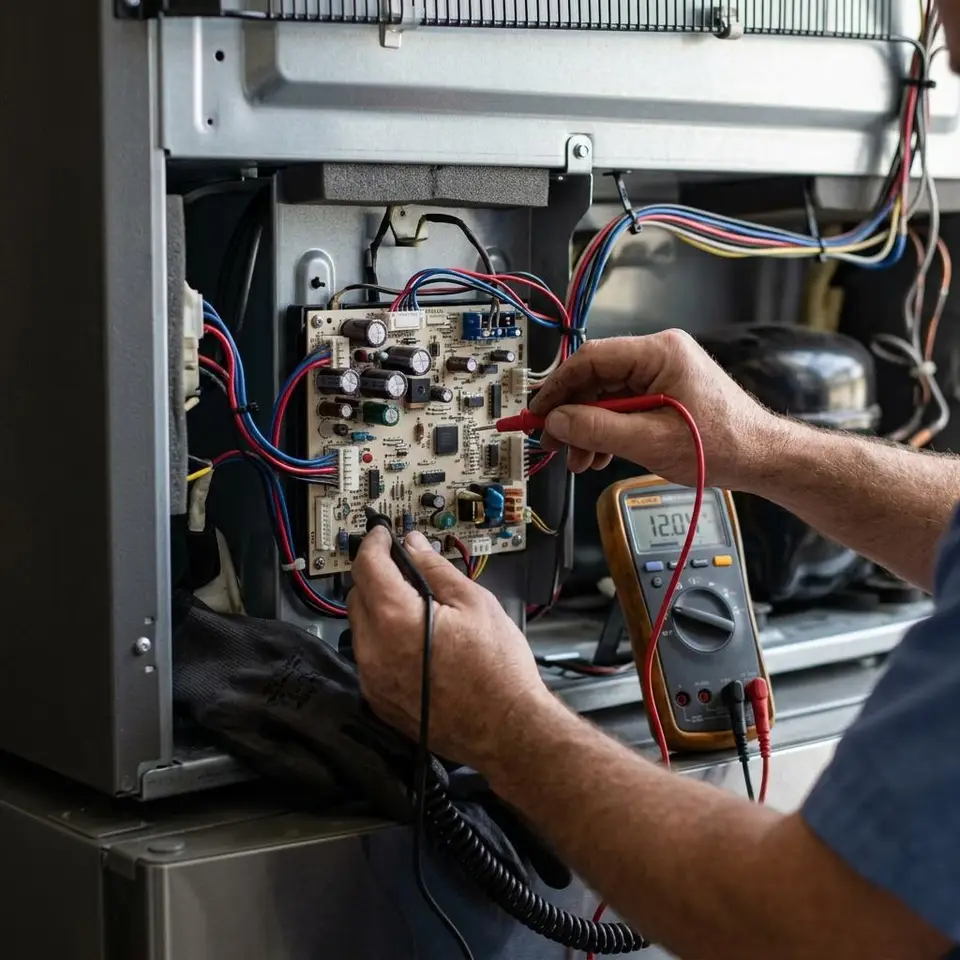
Before any sealed system recommendation, electrical parts such as the start relay, overload and control board are ruled out, and the defrost system is checked. Temperature readings and frost patterns on the evaporator help show whether refrigerant is moving properly.
Leaks and refrigerant
If refrigerant has escaped, the leak point has to be found and repaired before the system can be evacuated and recharged to the correct amount. Simply adding refrigerant without addressing the leak does not solve the problem.
Compressor and component replacement
A compressor that will not start or will not pump, a restricted capillary tube or a failed filter drier may require brazing, evacuation and a fresh charge. This is precise work that depends on the specific model.
Repair or replace
Sealed system work is often the most significant repair a refrigerator can need. You should get a straightforward explanation of what failed and what the work involves so you can weigh it against the age, condition and value of the appliance.
What to note before you call
- Whether the compressor is running, clicking or silent.
- Whether both sections are warm, or only the refrigerator side.
- Any frost you can see on the freezer back wall or evaporator panel.
- The approximate age of the refrigerator and its model number.