Wine Cooler Repair
Understanding the problem
Wine coolers come in two broad designs. Compressor models work much like a small refrigerator. Thermoelectric models use a solid state cooling module and fans, which keeps them quiet but sensitive to warm rooms. Knowing which type you have shapes the diagnosis from the start.
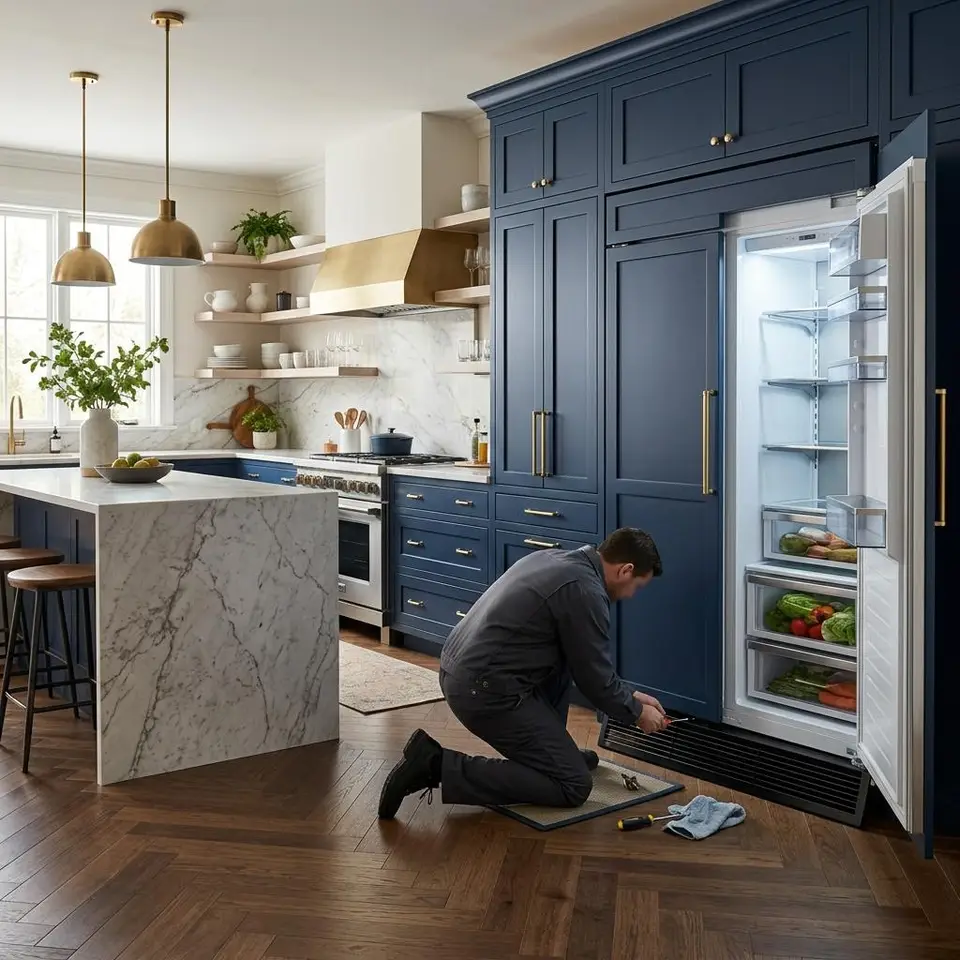
Undercounter wine coolers also share the ventilation challenges of other built in appliances. They usually breathe through a front grille, so blocked airflow can quickly show up as warmer temperatures and longer running.
Common wine cooler problems
- The cooler is warmer than the setting, or one zone is warm while the other is fine
- Temperature swings between checks, rather than holding steady
- Condensation or frost forming on the back wall or glass door
- Rattling, buzzing or fan noise that was not there before
- A blank or flickering display, or buttons that do not respond
- Vibration you can feel through the shelves
What wine cooler repair covers
Compressor models
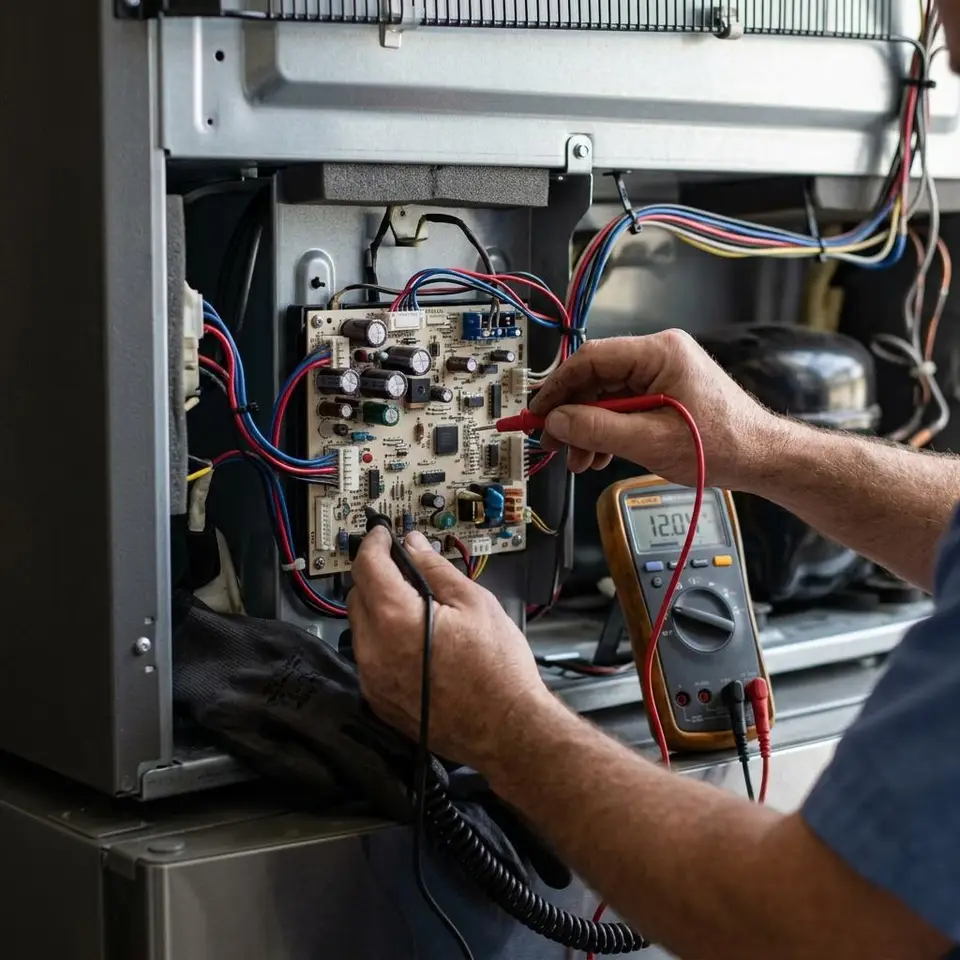
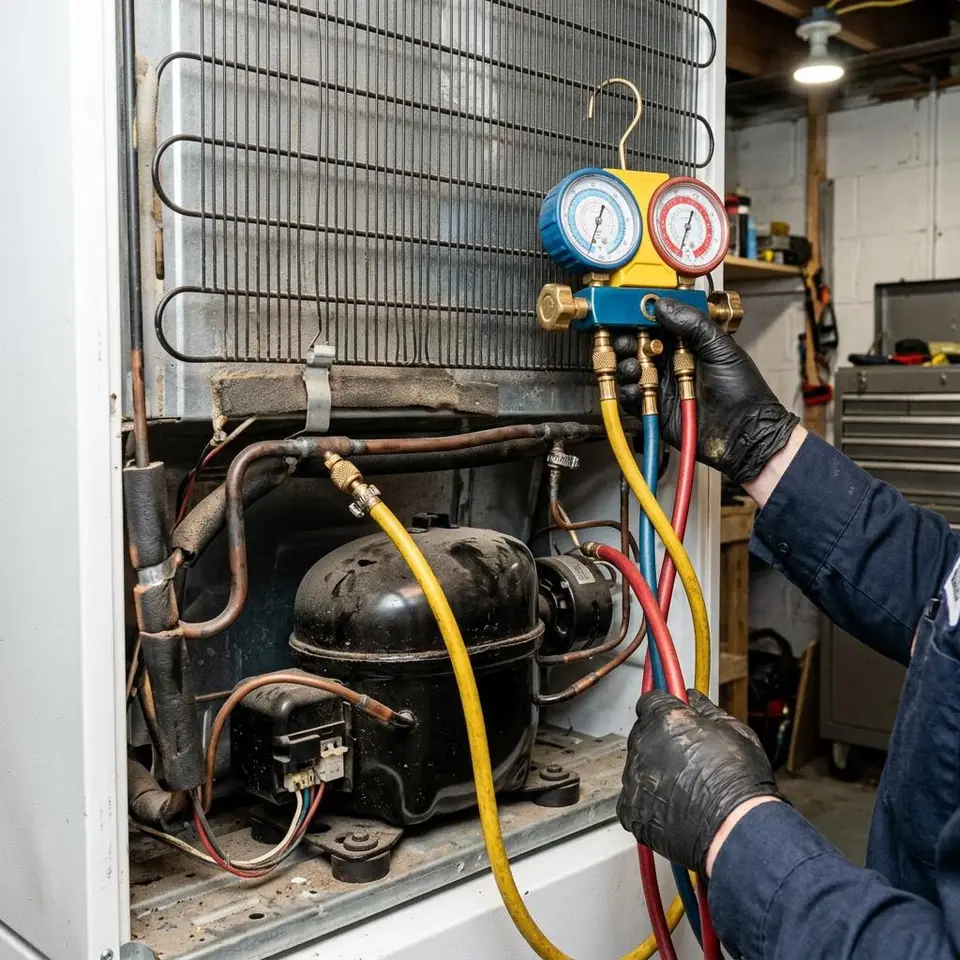
Compressor wine coolers can share many faults with refrigerators, including failed fans, start relays, thermostats and defrost issues. Diagnosis follows the same careful testing used on full size units.
Thermoelectric models
Thermoelectric coolers depend on a cooling module, a power supply and fans on both sides of the module. When one fan or the module itself fails, the cabinet often settles only a little below room temperature.
Dual zone controls and sensors
Dual zone units use separate sensors and sometimes separate fans or dampers. A failed sensor can make one zone behave oddly even when the cooling system is healthy.
Door seals and glass
Glass doors and their gaskets need to seal tightly to keep humidity and heat out. Worn seals can cause condensation and make the unit work harder than it should.
Quick checks for wine coolers
- Make sure the front grille or rear vents have room to breathe.
- Check whether the room itself has warmed up, since thermoelectric units are sensitive to ambient heat.
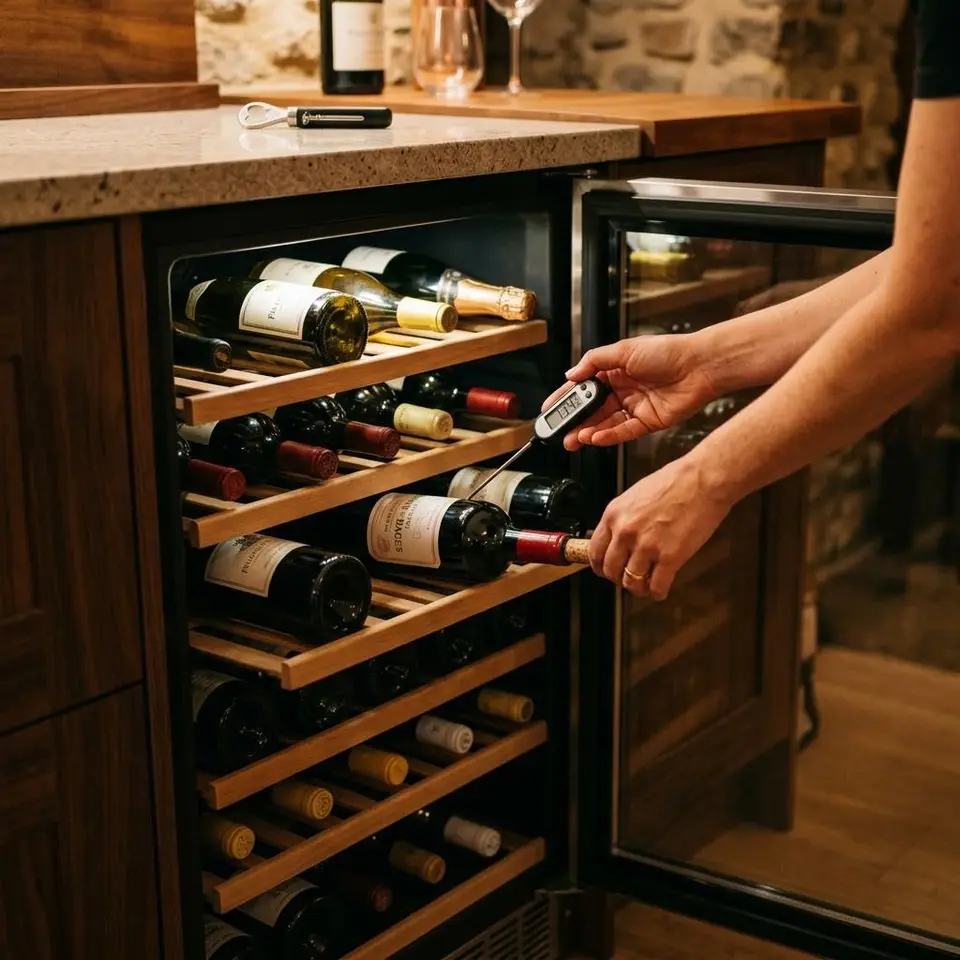
- Use a separate thermometer to confirm the actual temperature in each zone.
- Note whether the unit is freestanding or installed under a counter.