Refrigerator Repair
Understanding the problem
A refrigerator rarely fails all at once. More often it starts running longer, the milk stops feeling quite cold, or a puddle shows up under the crisper drawers. Those early signs are worth a phone call, because a small fault such as a clogged defrost drain or a weak fan motor can push the compressor and other parts much harder than they were designed to work.
Charlotte summers are long, hot and humid. Kitchens and garages warm up, and a refrigerator has to move more heat out of the cabinet to keep the inside cold. A unit that coped well in January can struggle by July, which is often when a marginal part finally shows itself.
Signs your refrigerator needs attention
- The fresh food section feels cool rather than cold, even with the dial or display set correctly
- The freezer is cold but the refrigerator side is warm, which often points to airflow or defrost problems
- Water pooling under the crisper drawers or on the floor in front of the unit
- Clicking, buzzing, grinding or a fan that sounds louder than usual
- The refrigerator runs almost nonstop, or cycles on and off every few minutes
- Display panels, lights or controls that no longer respond
What a refrigerator repair usually covers
Cooling and airflow
Most refrigerators cool the fresh food section with cold air moved from the freezer by fans and dampers. A failed evaporator fan, a stuck damper or ice blocking an air channel can leave the freezer cold and the refrigerator warm. These parts are checked first because they are common and usually practical to replace.
Defrost system
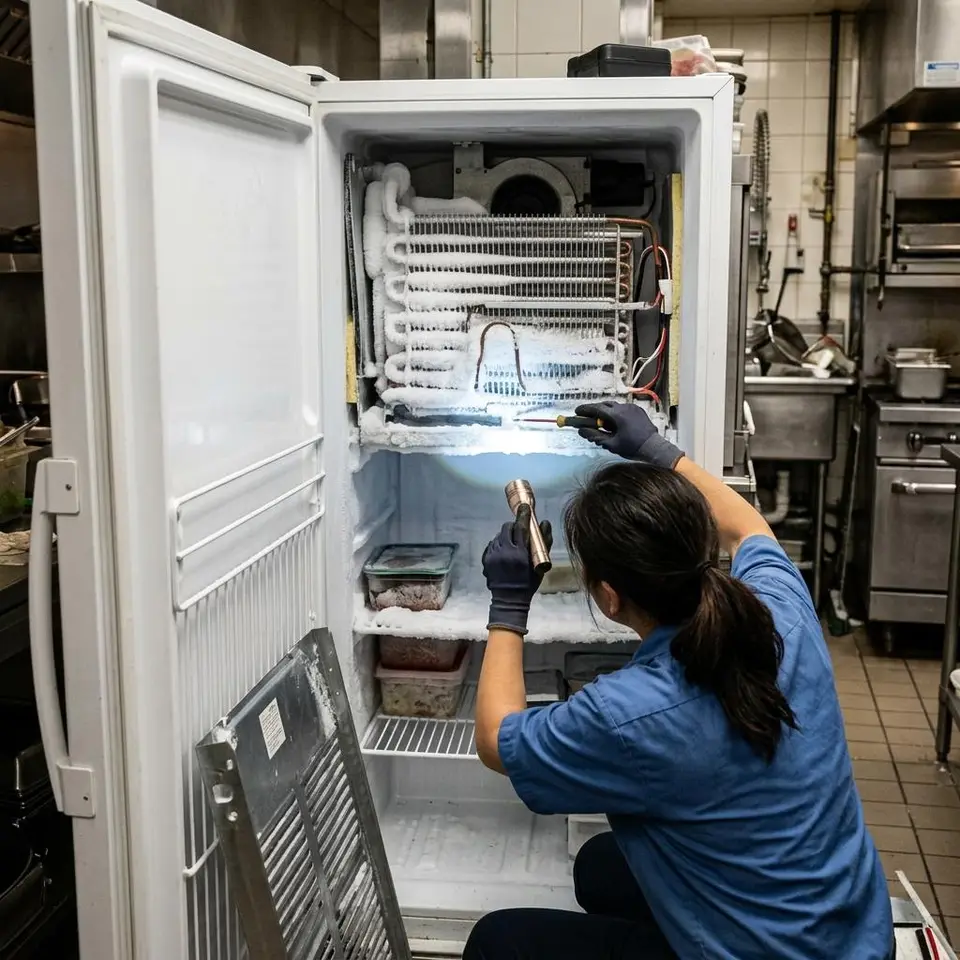
Frost free models melt evaporator frost on a schedule using a heater, a thermostat or sensor, and a timer or control board. When any of those stop working, frost builds up until air cannot pass through the coils. The result looks like a cooling failure, even though the sealed system itself may be fine.
Controls, sensors and electrical parts
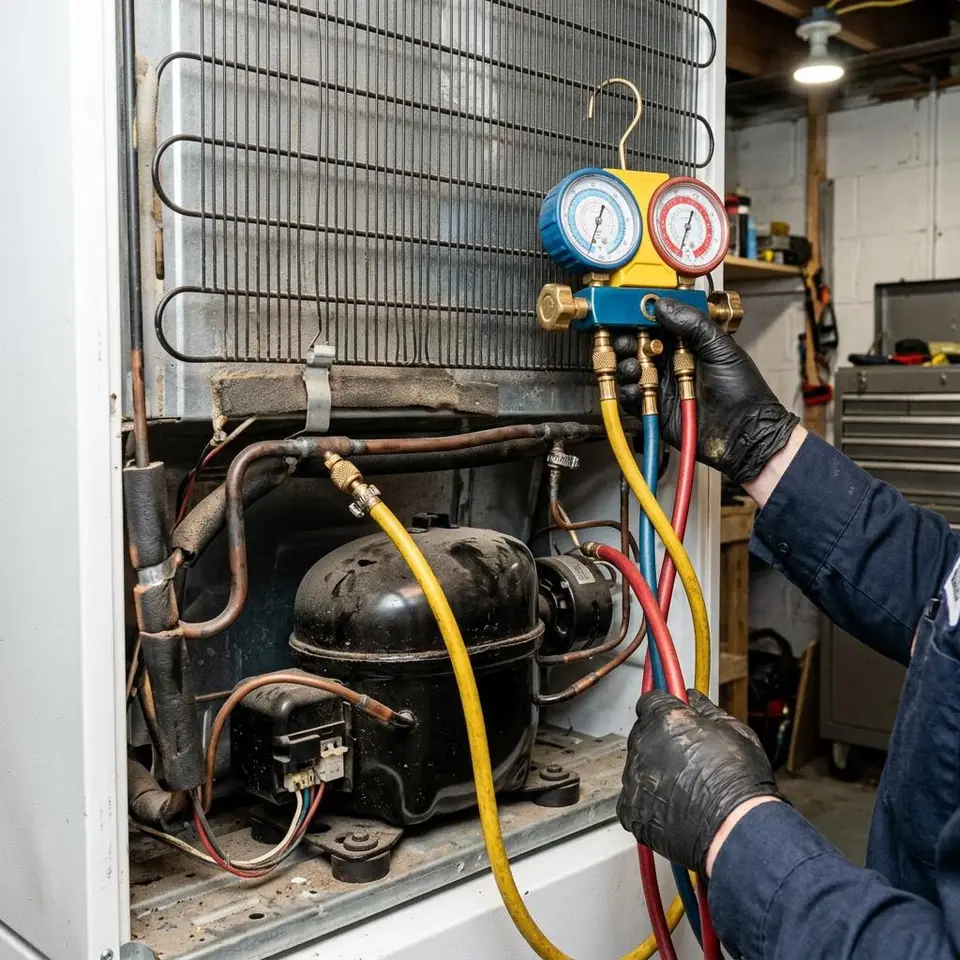
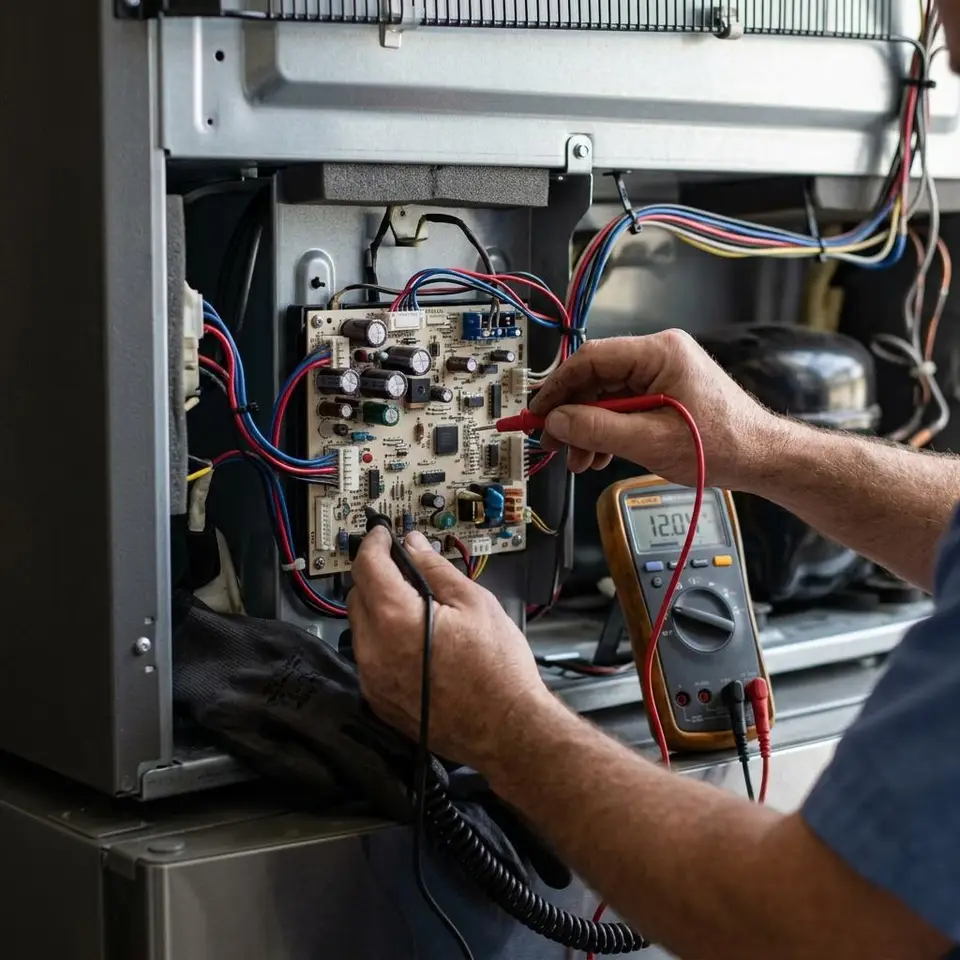
Thermistors, control boards, start relays and wiring all play a part in how a refrigerator decides when to run. Testing these with a meter helps separate a simple sensor fault from a deeper problem before any parts are ordered.
Leaks and door seals
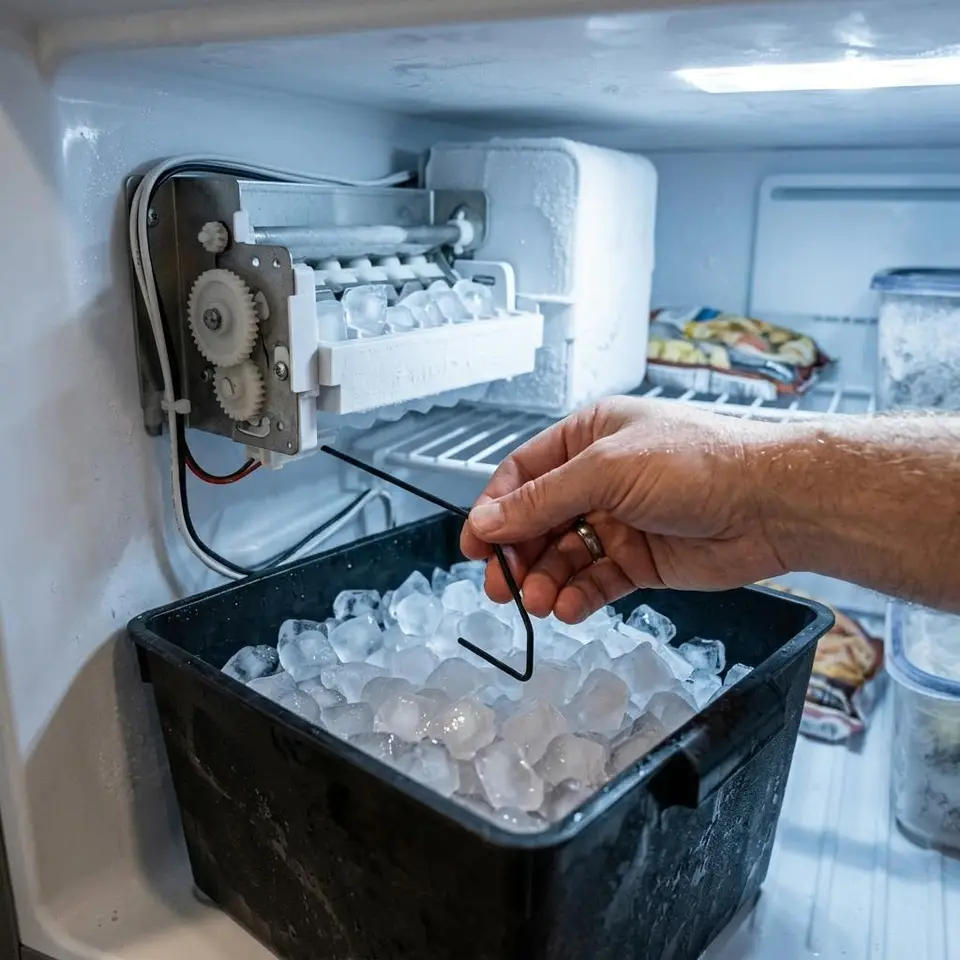
Frozen or blocked defrost drains, cracked water lines and worn door gaskets are frequent causes of water on the floor and frost inside. A torn gasket lets warm, humid air in, which also makes the unit run longer.
Helpful steps before you call
- Confirm the unit has power and that the temperature setting has not been bumped.
- Look at the condenser coils near the bottom or back. Heavy dust can make a refrigerator run hot.
- Keep the doors closed as much as possible to protect food while you wait for help.
- Find the model and serial number label, usually inside the fresh food section on a side wall or near the top.